The Signal from the Portland Urban Mobility Innovation Summit
Written by Leo Ochoa, Managing Director
In June, VertueLab partnered with Prosper Portland to host the Portland Urban Mobility Innovation Summit. The summit brought together founders, mobility operators, policymakers, economic development leaders, and other partners working across zero-emission initiatives to explore the future of urban mobility in our region.
It was intentionally designed as a working session–not another traditional summit. Attendees remained engaged throughout, actively contributing ideas, identifying barriers, refining shared challenges, forming working groups, and beginning to shape potential projects and next steps.
That proved something important:
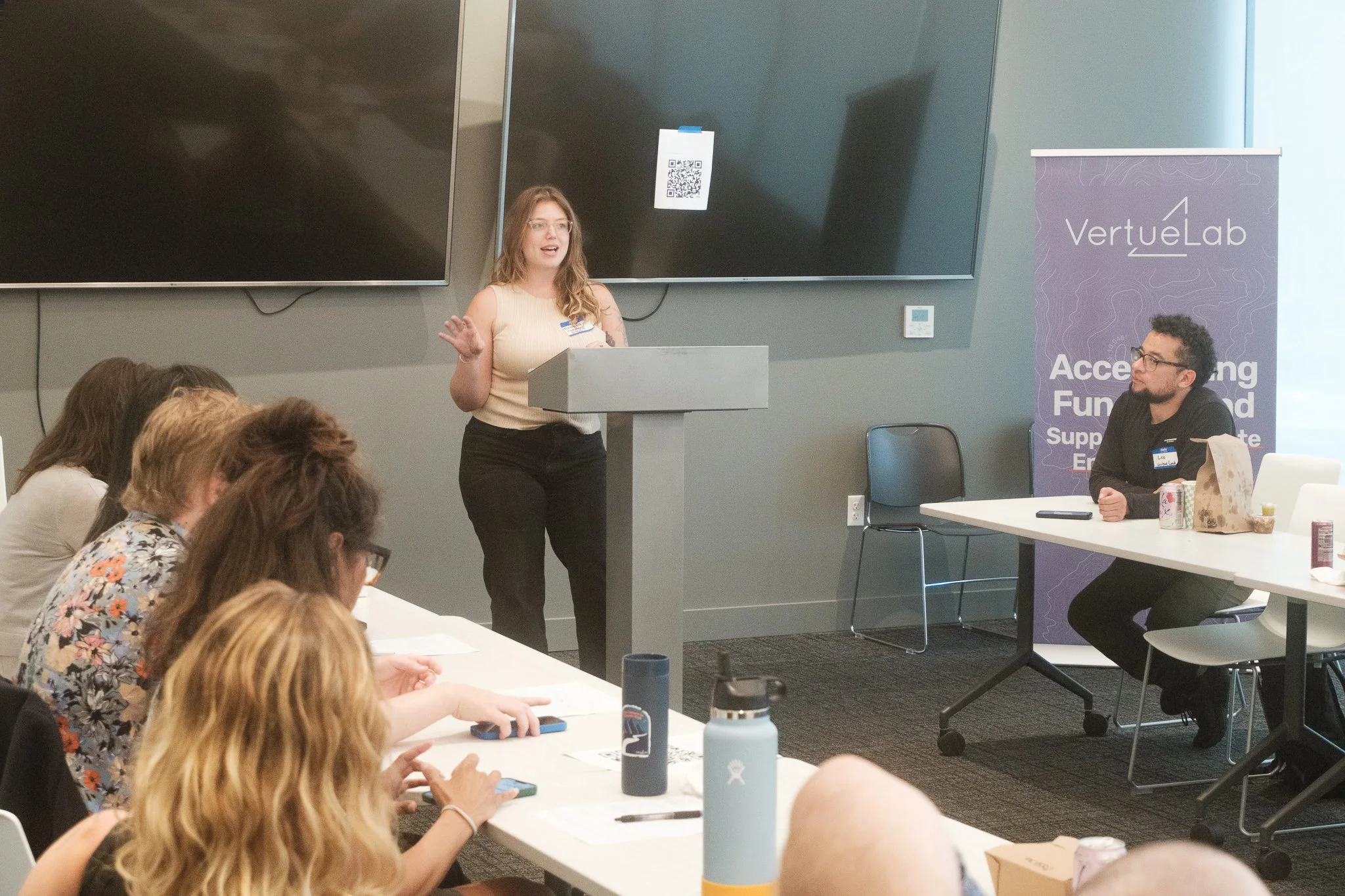
Hannah Morrison, PBOT
Oregon’s climate community is not asking for more disconnected gatherings. It is asking for places where people can build together around defined challenges, visible projects, and actionable opportunities.
The missing layer is not enthusiasm.
It is sustained coordination.
Oregon needs trusted ecosystem organizations that can convene the right people, translate broad challenges into focused initiatives, and maintain momentum after the room clears.
This is where VertueLab comes in.
Why VertueLab Matters in Oregon Now:
VertueLab’s role cannot stop at supporting individual companies; we must help strengthen the conditions around them.
That means convening partners around urgent opportunities, connecting founders to local resources, developing clearer commercialization pathways, supporting collaborative projects, and moving more quickly from conversations to pilots, businesses, investment, and jobs.
VertueLab is not here to replace the organizations already serving Oregon.
We are here to work alongside them, identify gaps in existing efforts, and help build the connective platform that allows the entire ecosystem to operate with greater speed, coordination, and impact.
This is not passive ecosystem support; it is active climate-economy building.
It requires sustained leadership, trusted relationships, clear priorities, and organizations willing to take responsibility for moving work forward.
VertueLab intends to be one of those organizations.
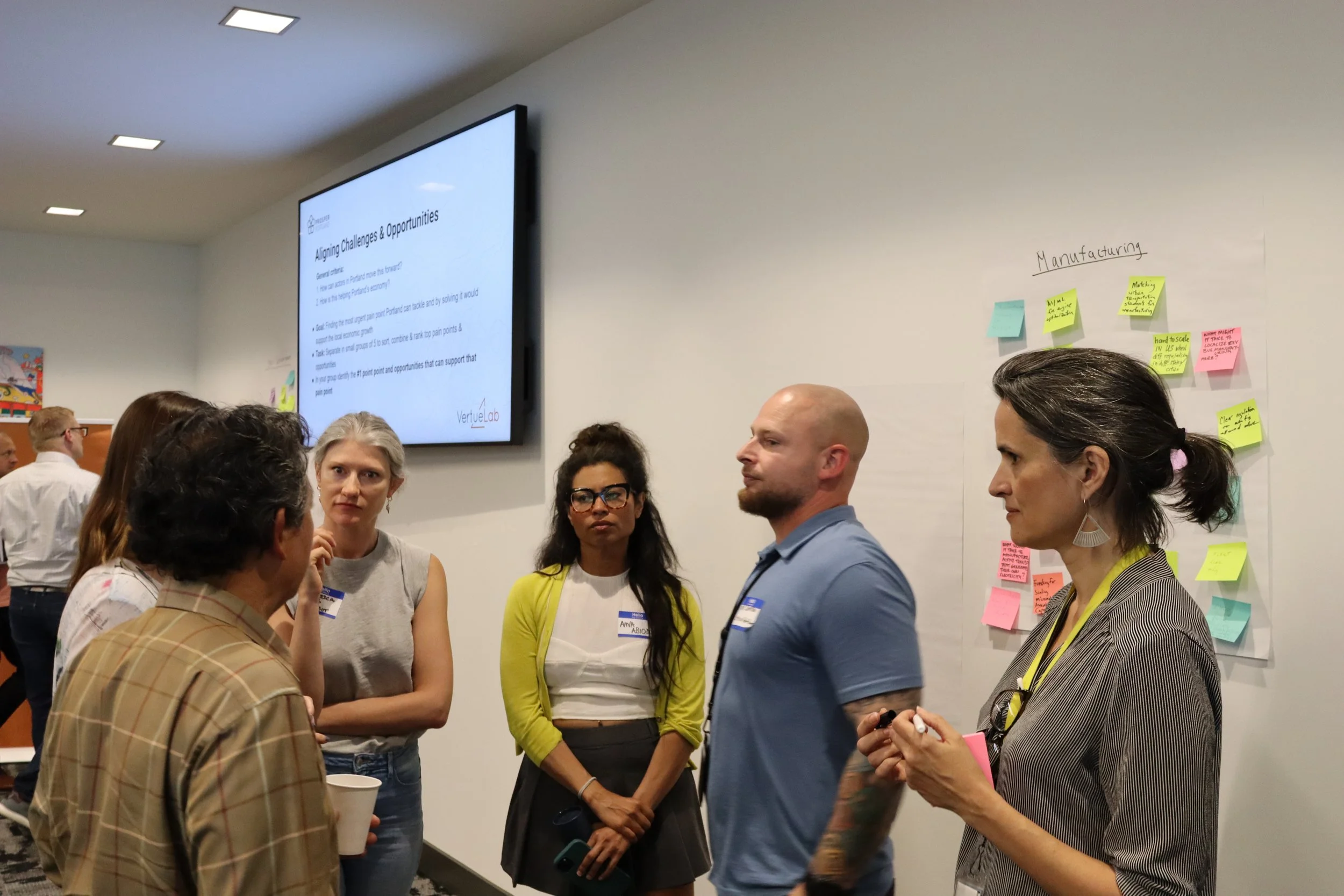
Attendees at the Urban Mobility Innovation Summit
Looking for the Builders:
My biggest reflection from the summit is that Oregon already has many of the components required to become a leading center for climate innovation in the Pacific Northwest.
We have entrepreneurs, researchers, public agencies, investors, manufacturers, community organizations, and economic-development leaders eager to contribute.
What we do not yet have is enough shared infrastructure connecting those assets into a functioning pipeline.
We need more partners willing to build the programs, funding for the pathways, pilot opportunities, industry networks, and commercialization systems that are still missing.
Those are the partners VertueLab is looking for.
Overall Synthesis:
AI tools were used for gathering notes, talks, and group activity outcomes live during the summit. The following are takeaways from the event:
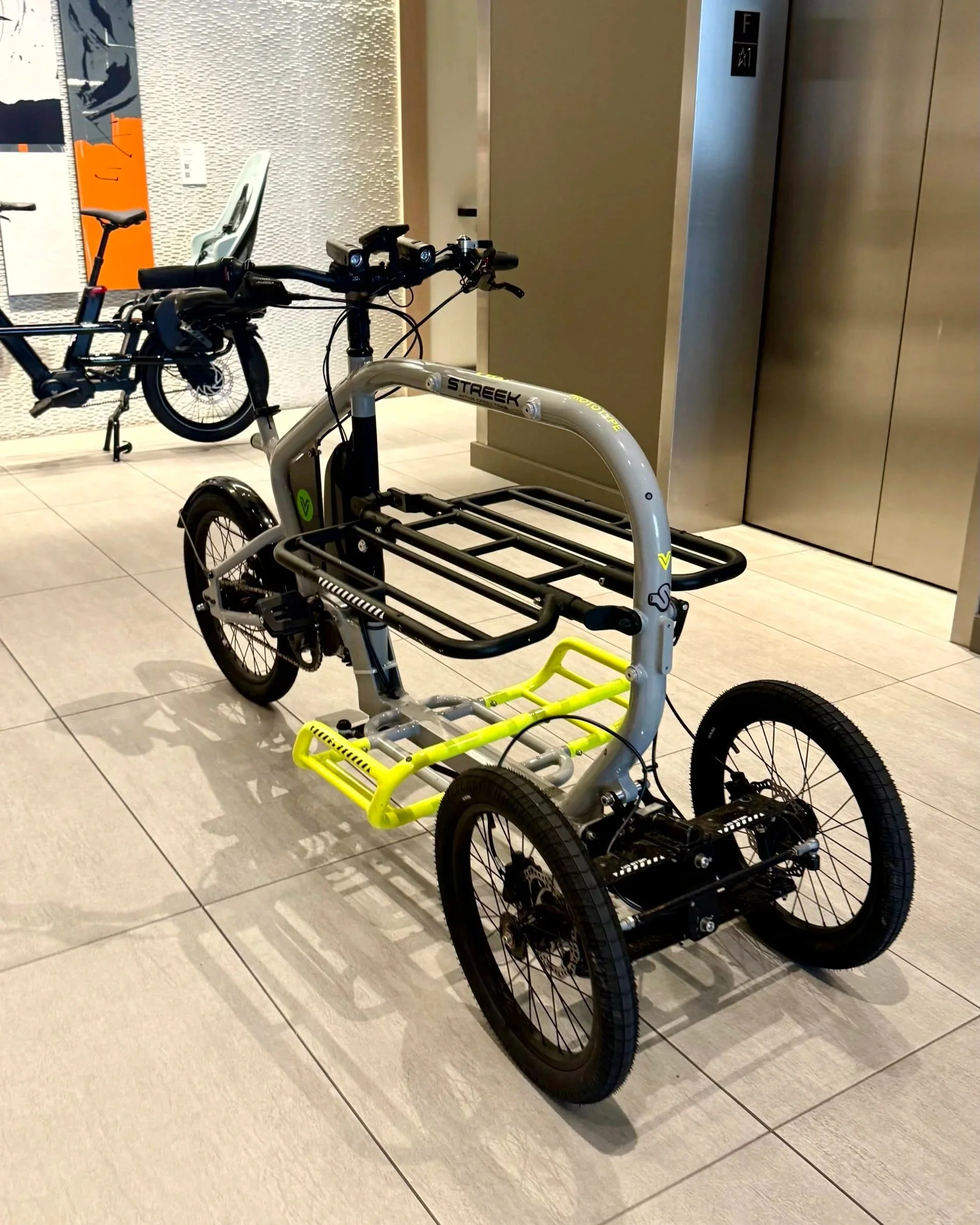
Electric Trike built by Vvolt
Although the speakers represented different sectors, they converged on a shared vision:
Portland's next phase of urban mobility is less about inventing new technologies and more about integrating existing ones into a coordinated, equitable ecosystem.
Success depends on accelerating infrastructure deployment, strengthening public-private partnerships, modernizing policy, and designing mobility systems around people's daily needs rather than individual vehicles. The workshop suggests that Portland's greatest opportunity lies not in isolated projects, but in connecting charging, shared mobility, freight, transit, and community engagement into a cohesive urban mobility network.
Portland’s biggest opportunity is not a single technology. It is building the connective tissue between charging, fleets, freight, shared mobility, workforce, manufacturing, and community co-design.
The city already has many pieces: innovative public agencies, local companies, nonprofits, utilities, training programs, manufacturers, and community partners. The challenge is that the pieces are fragmented, underfunded, and often lack a clear business case.
The strongest path forward is to create shared infrastructure and shared coordination: shared chargers, shared fleet hubs, shared logistics, shared data, shared financing, and shared community ownership.
AI Prompt: “What are the most urgent pain points Portland OR can tackle now and by solving it would support the local economic growth?”
Looking across both the lightning talk presentations and the breakout sessions, a clear pattern emerged:
Portland's biggest opportunities are not technological—they are coordination, infrastructure, and market development challenges.
The most urgent pain points are those where local action can unlock private investment, create jobs, and improve competitiveness without waiting for major federal policy changes.
Summary Report
If you’d like a copy of the full concept building summary that dives into areas of opportunities, priorities, and realistic urban mobility concepts reach out to VertueLab for a PDF copy.