Entrepreneur Highlight: Solarcycle
At VertueLab, we serve those shaping the Pacific Northwest’s climate future. This includes climate tech entrepreneurs at any stage of their journey, from idea to impact. Our entrepreneurs recognize the needs of their communities and are developing the technologies that offer solutions to the challenges of our rapidly changing climate. Since 2007, VertueLab has been a leader in the climate innovation ecosystem, connecting entrepreneurs to capital and communities so their innovations take root where people live and work.
In this installment of our Entrepreneur Highlight series, we take a closer look at Solarcycle, a company started by entrepreneur Isaac Porras. Isaac took part in our 45Camp Pre Accelerator program, where he started developing his Tiny Home, an innovation built to address the need for housing in agrivoltaic farming communities. Isaac’s Solarcycle home is entirely solar-powered, and his success proves the potential of affordable, solar-reliant living. Keep reading for our interview with Isaac to learn about his inspiring innovation and what comes next.
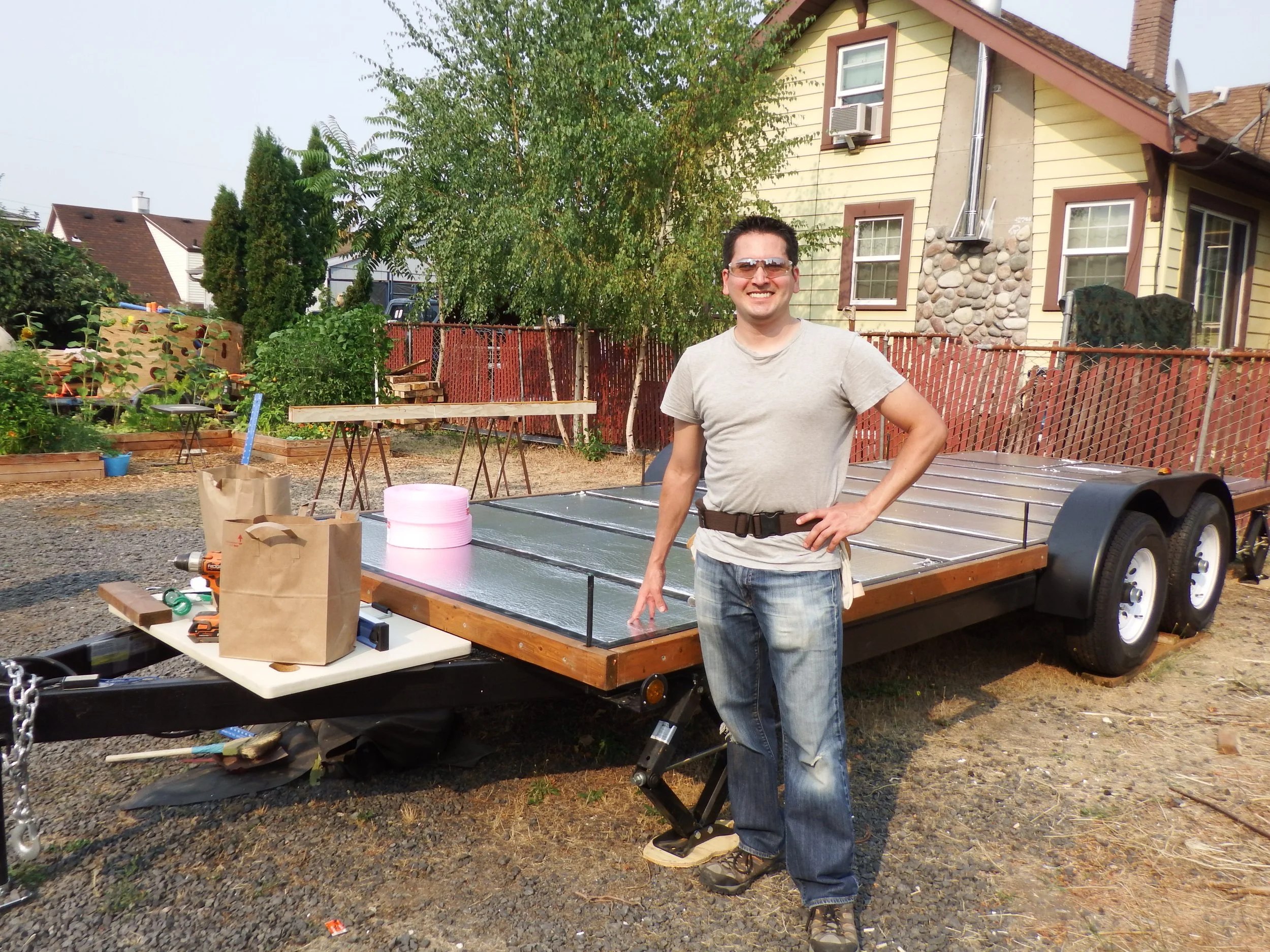
Entrepreneur Isaac Porras with the foundation of his solar-powered tiny home
How does your SolarCycle Tiny Home solution help address climate challenges facing our communities?
While the farmer is waiting for the main Agrivoltaic permit approvals, system design, and contractor agreements to be finalized, Solarcycle solar-powered tiny homes and other backup battery systems can be installed immediately on the property for the farmer to begin realizing solar off-grid rental and productivity returns on investment without any need for gasoline or propane generators. Agrivoltaic farmers tend to install smaller and less profitable grid-tied 4 MW, 20-acre solar array systems because it is the maximum size that farmers can install with minimal permit and legal requirements, which takes about 2 years to complete. This prevents Agrivoltaic farmers from using solar power for other off-grid uses that would increase the profitability of the system, like storing the solar power on-site for use during emergency power outages like ice storms and wildfires or powering tiny homes for worker housing and eco-tourism, which can be powered with less than 10% of the total Agrivoltaic solar panel array.
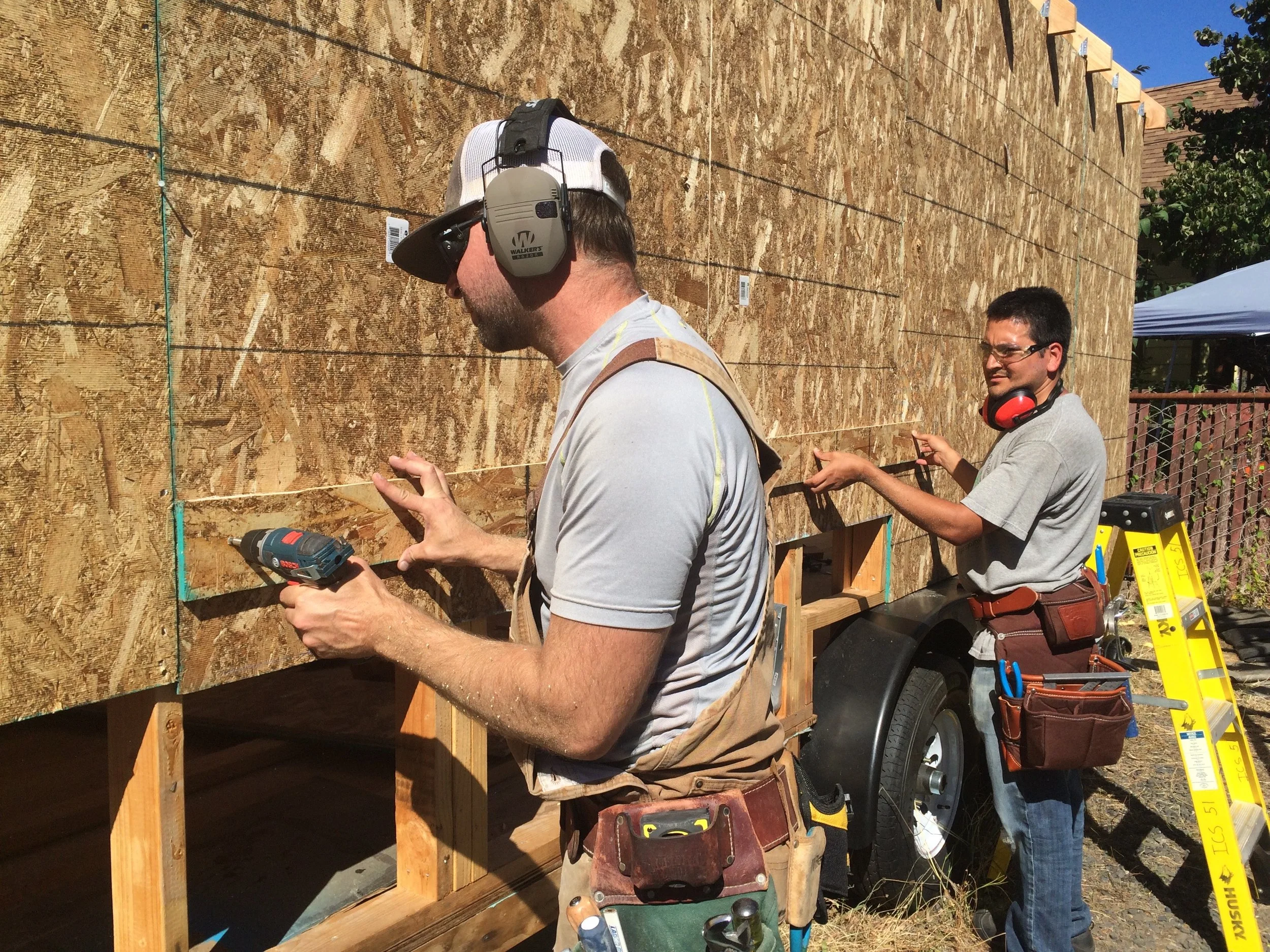
Isaac’s team working on the tiny home build
What is the biggest benefit to the communities using your solution?
The economic security these tiny homes will bring to our farm community will be a 100% self-sufficient supply of solar energy for worker housing and other uses, without gas, power bills, or power outage interruptions of more than 20 minutes a year.
Even in harsh weather conditions, people living in Solarcycle solar off-grid tiny homes on the farm will not experience fear, financial hardship, or stress from typical power outage problems like spoiled food in the refrigerator, lack of heat, lack of air conditioning, or not being able to charge their phones.
What experience gave you the spark to go into entrepreneurship and begin building the Tiny Home?
What started me on the journey to search for 100% off-grid solar living was when I was laid off from my job in 2009, became homeless, and realized that there were not many alternative living options that could provide shelter despite the high-tech innovations all around me. I then vowed to use my engineering skills to make 100% solar off-grid living possible for those who couldn’t afford the mainstream costs of living during an economic crisis. Over time, I learned about the critical design criteria for 100% solar off-grid living, carefully calculated the energy requirements, and measured the results to validate my predictions. Despite difficulties in keeping this solar tiny home project going, I knew it was important to have these alternative living options not just for economic hardships, but for Climate Change hardships too. Agrivoltaic farmers are the first customers to need alternative solar off-grid living options as their top priority compared to other customers at this moment in time.
What did you value most from the VertueLab pre-accelerator program?
Using VertueLab's courses to research my Solarcycle solar-powered tiny home business has helped me discover the Agrivoltaic Farmer market segment as the top-priority customer who requires 24-hour off-grid solar backup power to withstand harsher weather due to climate change. The network of startups and mentors that VertueLab provided was essential in guiding me toward the correct business model that has the highest probability of success for the future and the most benefit for the community.
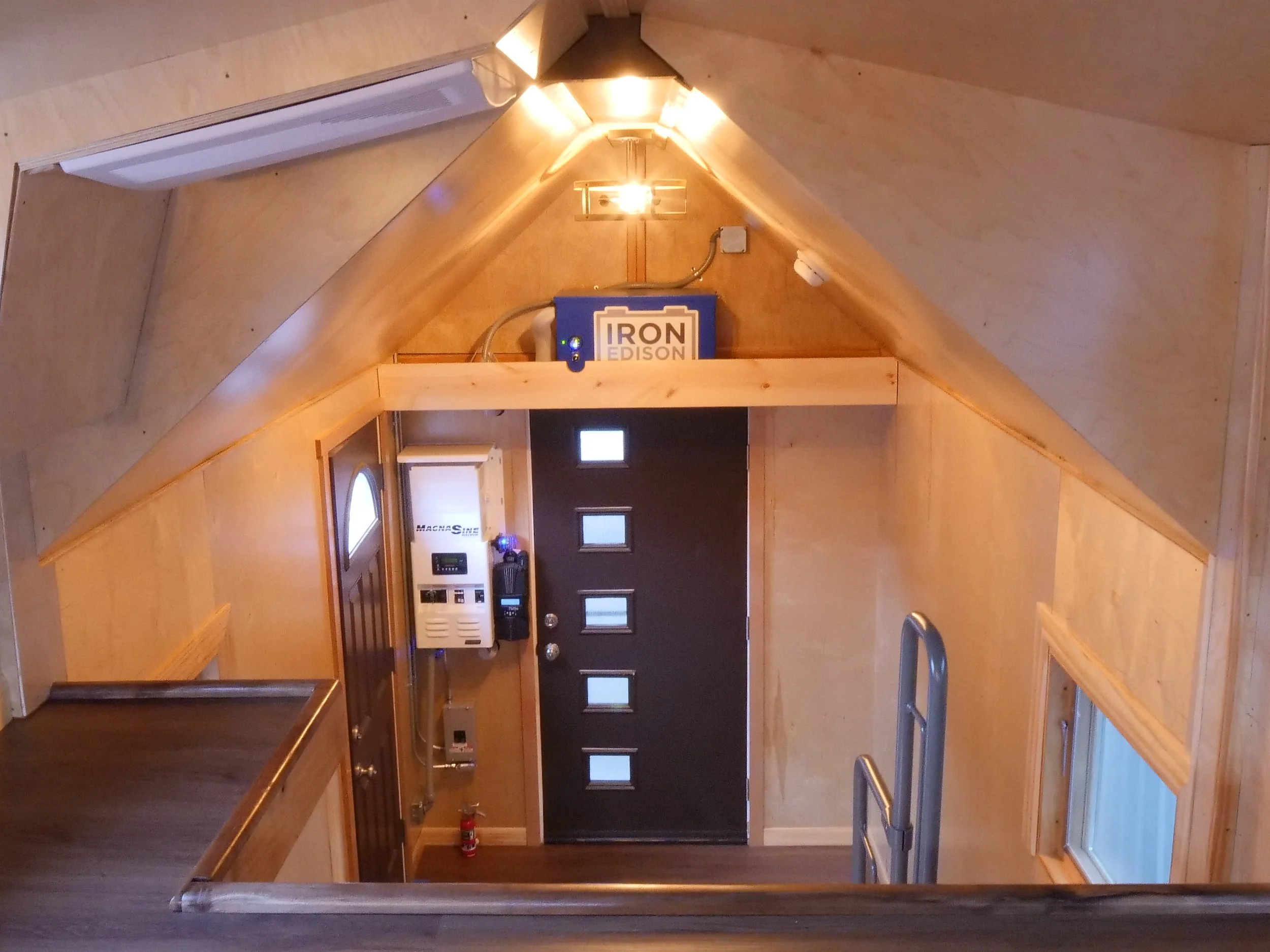
Interior image of Isaac’s tiny home
What advice can you offer new entrepreneurs? And what is an ask you have for potential funders who can provide support for projects like yours?
For new entrepreneurs who plan on making products related to off-grid solar power or climate change resiliency, I recommend carefully measuring your own personal daily energy consumption and then calculating what off-grid solar or other carbon footprint reduction technology would be able to meet that requirement. The idea is that if your own off-grid solar or carbon footprint reduction products can't work sustainably in your own daily life, then they have a very little chance of working in your customer's daily life. This type of hands-on experimentation can take a long time, especially if it requires expensive equipment. Still, it is necessary to make sure the final product will continue to perform for decades while meeting the customer's expectations.
An ask for potential funders is to think in terms of decades of sustainable, high-quality hardware product design while providing the necessary support. Finishing market-ready hardware products requires qualifying suppliers, doing real-world tests, and getting certified, which takes a long time, so funders should be expected to support product development from start to finish.
What comes next for you after your first customer acquires your Tiny Home?
After I'm able to sell my first 20-foot solar-powered prototype tiny home, I will use the funds to complete the next 24-foot final version of the 24-hour off-grid solar-powered tiny home by Q1 2027. I learned a lot from the prototype build, so the final version will have fewer build inefficiencies to keep the quality high while reducing the build time and cost. I will also work with my other key partner SPWES (started by Geb Mengistu, a fellow VertueLab alum), which builds the battery racks, to prepare for UL certifications and do final real-world testing before listing the new version for sale.
Check out the walk-through of Isaac’s Solarcycle tiny home, for sale now: